
Holtec International, the company working to restart the Palisades Nuclear Power Plant at Covert, is taking a major step onto Wall Street—and the future of the entire Palisades nuclear site figures prominently in the story the company is telling prospective investors.
Holtec Nuclear Corporation announced Tuesday that it has launched an initial public offering, or IPO, of 50 million shares of Class A common stock, expected to be priced between $15 and $18 per share. The shares are expected to trade on Nasdaq under the symbol HNUC.
At those prices, the offering would raise between $750 million and $900 million before expenses. Underwriters could purchase another 7.5 million shares if demand warrants.
Reuters reports the upper end of the offering would give Holtec Nuclear a valuation of approximately $10.2 billion.
For Southwest Michigan, however, the significance goes well beyond a new stock ticker.
The lengthy prospectus Holtec has filed with the Securities and Exchange Commission makes clear that the Palisades site along Lake Michigan is becoming one of the most important pieces of the company’s long-range growth strategy.
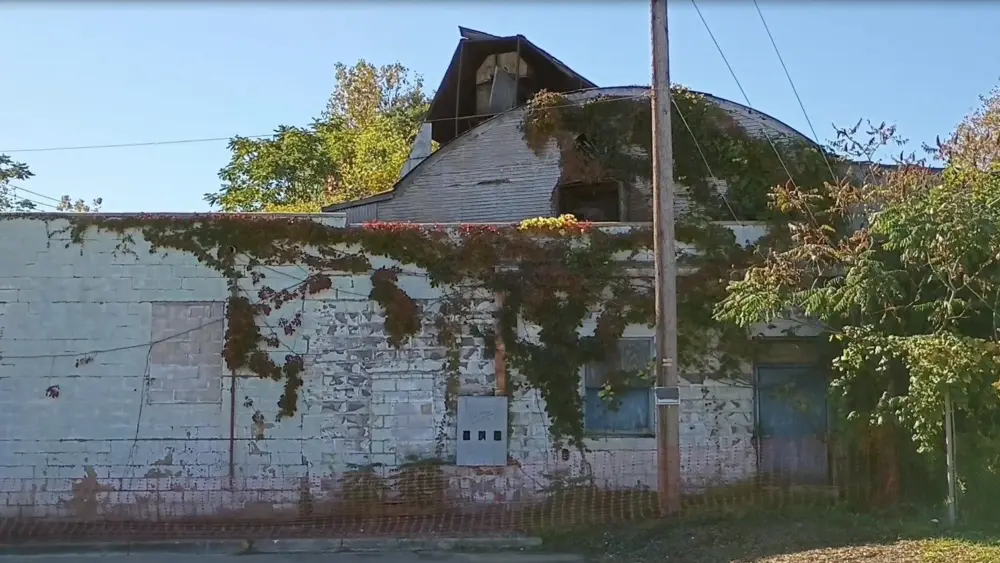
Holtec is now working toward returning the existing 800-megawatt Palisades plant to commercial operation after its 2022 shutdown. If successful, it would become the first permanently closed commercial nuclear power reactor in U.S. history to be restarted.
The company continues to say it expects that restart in 2026, although the project remains subject to completion of work and Nuclear Regulatory Commission oversight and approvals. The NRC continues to list Palisades at zero power with its status identified as “Plant Restart.”
Importantly, the new stock offering should not be viewed primarily as a new source of financing needed to complete that restart.
The restart already has a financing package that includes a federal loan facility of up to $1.52 billion through the U.S. Department of Energy, $300 million in support from the State of Michigan and a required investment by Holtec itself.
According to Holtec’s SEC filing, approximately $1 billion had been advanced under the federal loan program through June 30.
Instead, the IPO appears potentially more significant to what Holtec hopes to build at Palisades after the original plant is back in operation.
At the midpoint of its proposed stock price, Holtec expects to receive about $775 million from the offering after underwriting costs and other expenses. The company says that money can be used for general corporate purposes, specifically including accelerated licensing, deployment and manufacturing capacity for its SMR-300 small modular nuclear reactor.
And the first planned deployment of that technology is in Covert.
Holtec plans two SMR-300 reactors—known as Pioneer One and Pioneer Two—on the Palisades property. Together, the two units would be capable of generating approximately 680 megawatts of electricity, approaching the output of the existing Palisades plant.
Commercial operation of those units is being targeted for the early 2030s, although that timetable remains dependent on financing, regulatory approvals and other conditions.
In relatively simple terms, that means Holtec sees Palisades as considerably more than an old nuclear plant it hopes to bring back from retirement.
The restart is becoming a proving ground for the company’s ability to own and operate a nuclear power plant. The next-generation reactors planned alongside it are intended to become a showcase for technology Holtec hopes eventually to sell and deploy across the United States and internationally.
Holtec tells prospective investors that beginning with the first two units at Palisades, it hopes to establish a standardized SMR design and construction model that can lower costs and shorten construction schedules as additional reactors are built elsewhere.
That gives the Covert site an unusually prominent place in Holtec’s future plans.
The IPO also provides considerably more public information about a company that until now has largely been privately held.
Holtec Nuclear describes an established international nuclear business rather than a start-up built solely around the Palisades project. The company says it has provided products and services to more than 150 nuclear reactors around the world, operates on five continents, has three major U.S. nuclear manufacturing facilities and holds more than 200 granted patents.
The company also reported approximately $10.6 billion in remaining long-term contract backlog in its Nuclear Power Division as of June 30.
Those numbers suggest substantial existing operations behind Holtec’s ambitious nuclear expansion plans.
But they don’t eliminate the risks.
Nuclear plants—and particularly first-of-their-kind nuclear projects—require very large amounts of money long before they generate revenue. Holtec acknowledges in its SEC filing that the Palisades restart, expansion of its manufacturing operations and development of the SMR-300 are all capital-intensive.
The company also tells investors there is no guarantee that the SMR-300 will meet its current timetable or cost expectations. Holtec has not yet constructed one of the reactors or obtained every regulatory approval necessary to do so.
In that respect, the IPO is not so much proof that Holtec’s future plans are assured as it is another major step toward creating the financial resources to pursue them.
Going public also won’t mean giving up control of the company.
Holtec founder and CEO Dr. Krishna Singh and affiliated Holtec ownership interests are expected to retain approximately 99 percent of the company’s voting power immediately following the stock offering through a separate class of shares carrying enhanced voting rights.
So while outside investors will be able to own a piece of Holtec for the first time, strategic control will remain essentially where it has been.
For Southwest Michigan, perhaps the most telling aspect of the IPO paperwork is how frequently Palisades appears in Holtec’s description of its future.
A site that only four years ago appeared destined solely for decades of nuclear decommissioning is now being presented to Wall Street as the location of a historic reactor restart—and potentially the starting point for Holtec’s next generation of nuclear power plants.