

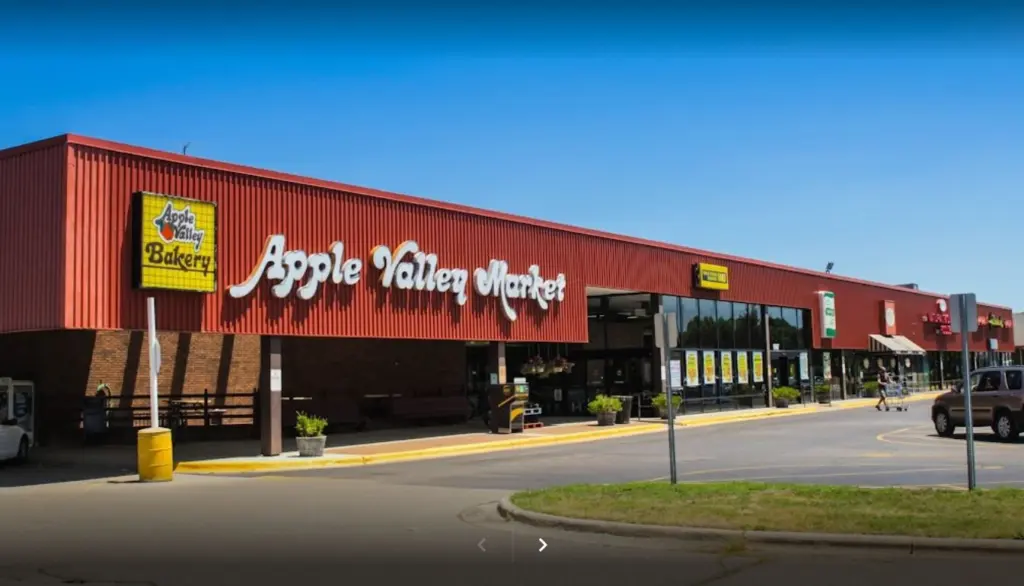
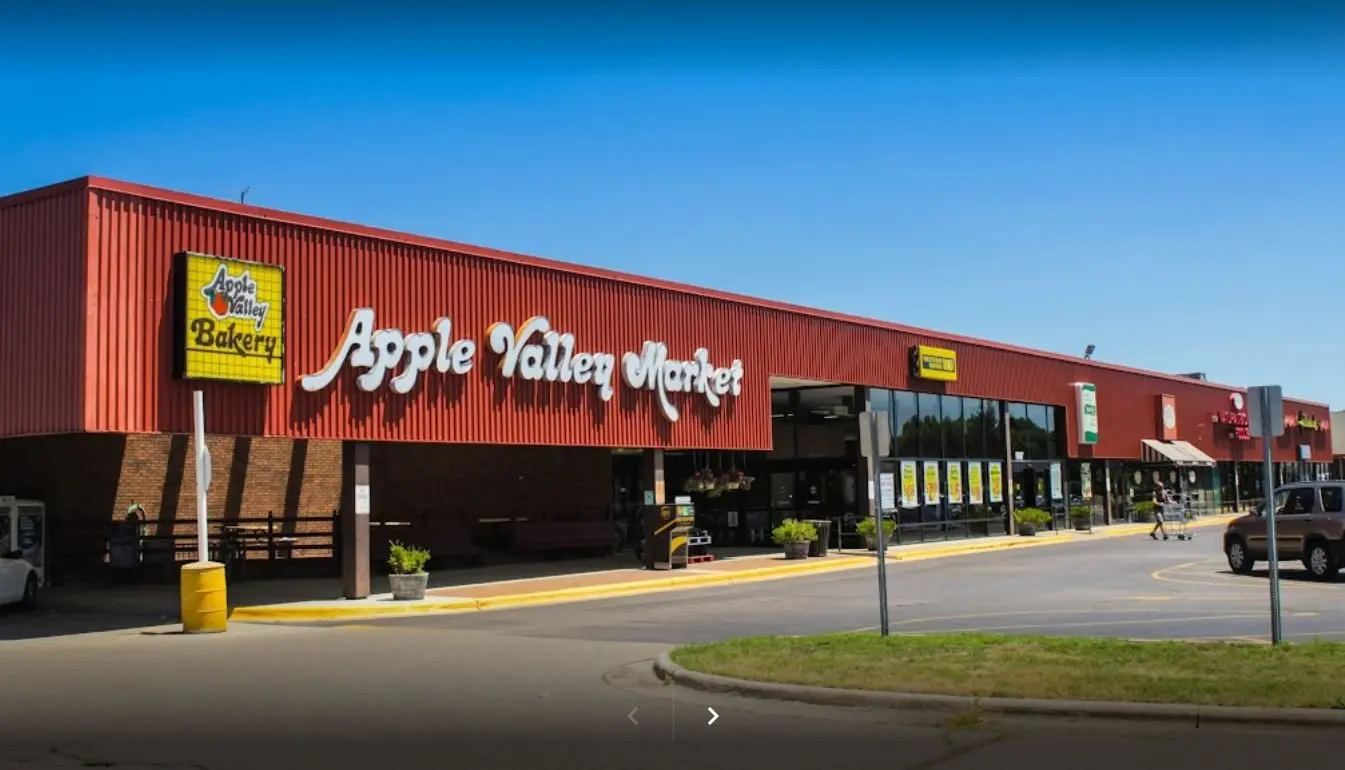
A long-time grocery and gathering place for natural-foods shoppers and the Seventh-day Adventist community across Southwest Michigan is now the subject of renewed speculation about its future.
The building housing Apple Valley Market has been placed on the market, a development that comes after more than a year of persistent rumors and online discussion about the store’s status.
The 51,000-square-foot retail complex at 9067 U.S. Highway 31 is currently listed for sale for about $2.9 million through United Country Real Estate – MacGregor Properties, a Portage real estate firm. Marketing materials describe the site as a mixed-use commercial center that includes the grocery store, bakery, café space, and a second floor with office suites.
The listing notes the “owner retiring and looking to sell.”
The property sits along Old U.S. 31 just south of Andrews University, directly across from the Berrien County Youth Fairgrounds, a location that has long made it a destination for both residents and students.
Attempts Tuesday by MoodyOnTheMarket.com to reach Apple Valley ownership were unsuccessful. Messages left with store leadership were not returned as of publication. Similar contact attempts in recent months also went unanswered.
Longtime community institution
The Apple Valley operation has deep roots in the Berrien Springs area and the local Seventh-day Adventist community.
According to the company’s own history, the business traces back to 1919, when it began as the College Supply Store in the basement of married student housing at what was then Emmanuel Missionary College, the predecessor to Andrews University. The campus-run store provided vegetarian groceries and employment for students.
In 1975, the operation moved to its current large facility along U.S. 31. Over time the business expanded, eventually operating several natural-foods stores across Michigan and neighboring states.
In 1998, Andrews University sold the store to private ownership, though the store continued to emphasize vegetarian foods and the Adventist health message that shaped its origins.
For decades the Berrien Springs location has served as the flagship store of the chain, featuring not only the grocery but also a bakery, café, gift shop and floral shop.
A familiar destination for generations
For many residents, Apple Valley has been more than just a grocery store.
The business has long attracted shoppers from across southwest Michigan and northern Indiana seeking vegetarian foods, bulk grains and specialty items tied to the Adventist lifestyle.
For generations of Andrews University students and Berrien Springs residents, it has been a regular stop for fresh bread, meat substitutes and natural foods not widely available in conventional supermarkets.
With the building now formally on the market, the future of that tradition remains uncertain.
For now, the store continues to operate — but the listing has added new fuel to the questions that have circulated around the community for months.
Rumors and empty shelves
The property listing arrives after more than a year of speculation among shoppers and community members about the store’s future.
Local social media discussions have repeatedly cited partially empty shelves and reduced inventory, with some shoppers questioning whether the store might be preparing to close or sell.
Those claims have circulated widely online but have not been confirmed by store management.
The Apple Valley website continues to list the Berrien Springs location as operating and promotes its vegetarian grocery products and bakery items.
Ownership tied to Benfield family
Public business records indicate the grocery operation is run by Apple Valley Natural Foods Inc., a Michigan corporation headquartered at the Berrien Springs store address.
According to publicly available business filings and directories, company leadership includes Kevin Benfield, listed as president or co-owner, and David Benfield, listed as a principal contact.
Those records suggest the company has been under Benfield family ownership since the university sold the business in the late 1990s.
While property ownership details require confirmation through county deed records, publicly available listings and corporate records associate the company with the same U.S. 31 address as the store complex.
Sale raises questions about what comes next
The real-estate listing markets the building as a mixed-use investment property, noting features such as retail space, the grocery infrastructure, and a second floor with multiple office suites.
Because the listing includes furniture, fixtures and equipment tied to the grocery operation, it remains unclear whether the intent is:
- sale of the real estate alone
- sale of the building and grocery operation together
- or redevelopment of the property by a new owner.
The listing also notes redevelopment potential because of the site’s proximity to Andrews University. MoodyOnTheMaarket.com will continue to monitor the story of Apple Valley Market as it progresses.
Apple Valley Market: A Century of Local History
1919
A small campus grocery called the College Supply Store opens in the basement of married student housing at Emmanuel Missionary College, serving students and staff with vegetarian groceries and staples.
1960
The college becomes Andrews University, and the store continues operating as a campus-related natural foods market tied to the Seventh-day Adventist health tradition.
1975
Apple Valley moves to its current large building along U.S. Highway 31 in Berrien Springs, expanding into a full-service vegetarian grocery with bakery and specialty foods.
1998
Andrews University sells the store to private ownership, though the market continues serving the Adventist and natural-foods community.
2000s–2010s
Apple Valley grows into a small regional chain with multiple stores in Michigan and neighboring states, while the Berrien Springs location remains the flagship.
2020s
The chain contracts to a smaller number of Michigan locations, with Berrien Springs still serving as the headquarters.
March 2026
The 51,000-square-foot Apple Valley complex on U.S. 31 is listed for sale for about $2.9 million, raising new questions about the future of the long-time community grocery.