
A new statewide report offers a mixed picture for women in Michigan’s workforce—showing steady progress in some areas, while long-standing gaps in pay and participation continue to hold back the state’s full economic potential.
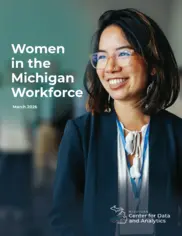
The 2026 Women in the Michigan Workforce Report, released by the Michigan Center for Data and Analytics, takes a detailed look at how women are working, earning, and advancing across the state.
More women working—but still fewer than men
Women make up a significant share of Michigan’s workforce, but they still participate at lower rates than men overall. That gap has been persistent, even as more women return to work following the pandemic and as employers continue to face worker shortages.
That matters locally as much as anywhere—because in a region like Southwest Michigan, where businesses are consistently looking for talent, bringing more women into the workforce isn’t just a social issue. It’s an economic one.
Pay gap still a reality
The report confirms what many already suspect: women in Michigan continue to earn less than men, on average.
Even when working full-time, women’s earnings lag behind their male counterparts. Previous versions of the report have put that figure at just over 80 cents on the dollar—and while there has been some improvement over time, the gap hasn’t gone away.
The reasons are familiar, but still stubborn:
- Women are more likely to work in lower-paying industries
- Fewer women hold higher-level leadership roles
- Time out of the workforce for caregiving continues to impact long-term earnings
Industry differences tell the story
Where women work also plays a major role.
The report shows women are heavily represented in sectors like healthcare, education, and service-related fields—industries that are essential, but often pay less than manufacturing, construction, or technology roles that are more male-dominated.
That imbalance has real implications in a manufacturing-heavy state like Michigan, where some of the highest-paying jobs remain out of reach for many women.
Childcare and family responsibilities still a factor
Another key takeaway: family responsibilities continue to shape workforce participation.
Women are far more likely to step away from jobs—or scale back hours—due to childcare or caregiving needs. That not only affects current income, but also career advancement over time.
It’s one of the clearest examples in the report of how workforce issues and community infrastructure—like access to affordable childcare—are directly connected.
Education and leadership: progress, but not equal
On the positive side, women in Michigan are increasingly well-educated and are making gains in professional fields.
However, that progress hasn’t fully translated into leadership roles. Women remain underrepresented in higher-paying executive and management positions, limiting both earning potential and influence in key industries.
Why it matters for Michigan’s economy
The bottom line from the report is straightforward: Michigan can’t afford to leave talent on the sidelines.
With employers across the state continuing to struggle to find workers, improving access, pay equity, and advancement opportunities for women isn’t just about fairness—it’s about competitiveness.
For communities like those in Berrien County and across Southwest Michigan, that could mean:
- Expanding workforce participation
- Filling critical job openings
- Strengthening household incomes
- Supporting long-term economic growth
The takeaway
There’s real progress to point to—but also no shortage of work left to do.
Michigan’s economy depends on its workforce. And right now, the report makes clear, there’s still untapped potential sitting in plain sight.